
Health and Safety as Culture, Not Enforcement
- greg workman
- Apr 26
- 3 min read


If you ask most people what health and safety looks like in their workplace, the answer is usually the same. Audits, inspections, rules, and someone telling you what you can’t do.
That’s where the problem starts.
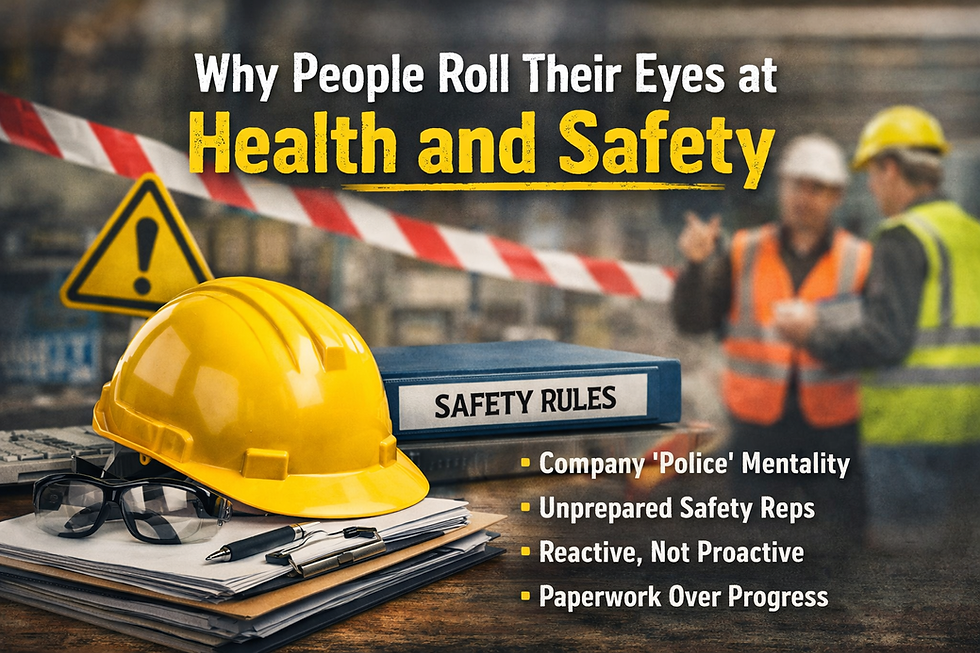
In a lot of organisations, health and safety is positioned as ENFORCEMENT. The role becomes about making sure policies are followed and stepping in when they’re not. On paper, that sounds reasonable. In reality, it often creates distance between the workforce and the very people trying to keep them safe.
When safety feels like policing
When health and safety is seen as enforcement, people naturally become cautious about engaging with it.
If raising an issue might lead to someone getting in trouble, or worse, being removed from site, then it’s easier to stay quiet. Near misses don’t get reported. Minor incidents get brushed off. Over time, this creates the illusion of a safe workplace, when in reality, problems are just going unspoken.
That’s where the real risk sits. Most major incidents don’t come out of nowhere. They’re usually preceded by smaller warnings that were either missed or never raised in the first place.
The gap between “safety first” and reality
You’ll often hear businesses say that safety comes before profit. It’s a good statement, but it only holds weight when it’s tested.
Take a situation where a health and safety staff member removes someone from site for unsafe behaviours. If that decision leads to delays or additional cost, does the business fully support it?
If the answer is no, or even “it depends”, then the message to the workforce is clear. Safety is important, but only up to a point.
That’s where the “us and them” mentality starts to creep in. Health and safety becomes the barrier to getting the job done, rather than something that supports it. And if senior leaders aren’t fully behind those decisions, it quickly undermines everything the policy says.
At that stage, enforcement becomes inconsistent. Rules start to feel optional. And health and safety risks becoming more about ticking boxes than actually protecting people.
The impact on the people doing the job
This doesn’t just affect the workforce. It has a real impact on the people working in health and safety roles as well.
If you’re constantly pushing for safer ways of working but being challenged or overruled, it wears you down. Over time, that can lead to frustration, disengagement, and people leaving the business altogether.
When that happens, you don’t just lose a person. You lose experience, knowledge of the site, and any trust they’ve built up with the workforce. Replacing that isn’t quick, and it isn’t cheap either.
What it should look like instead
Health and safety works best when it isn’t owned by one person or one team. It needs to be something the whole business is part of.
That means creating an environment where people feel comfortable speaking up. Where reporting a near miss is seen as a positive, not a problem. Where the goal isn’t to catch people out, but to understand how work is actually being done and where the risks really are.
It also means consistency from the top. If decisions are made in the name of safety, they need to be backed, even when it’s inconvenient. That’s what builds trust.
At its core, health and safety is a shared effort. It’s people looking out for each other, not waiting for someone else to step in.
Moving away from enforcement
The reality is, some level of enforcement will always be needed. But if that’s the main way health and safety shows up in a business, it’s always going to struggle.
Shifting away from that starts with how the role is positioned, how decisions are supported, and how people are encouraged to engage.


Comments